

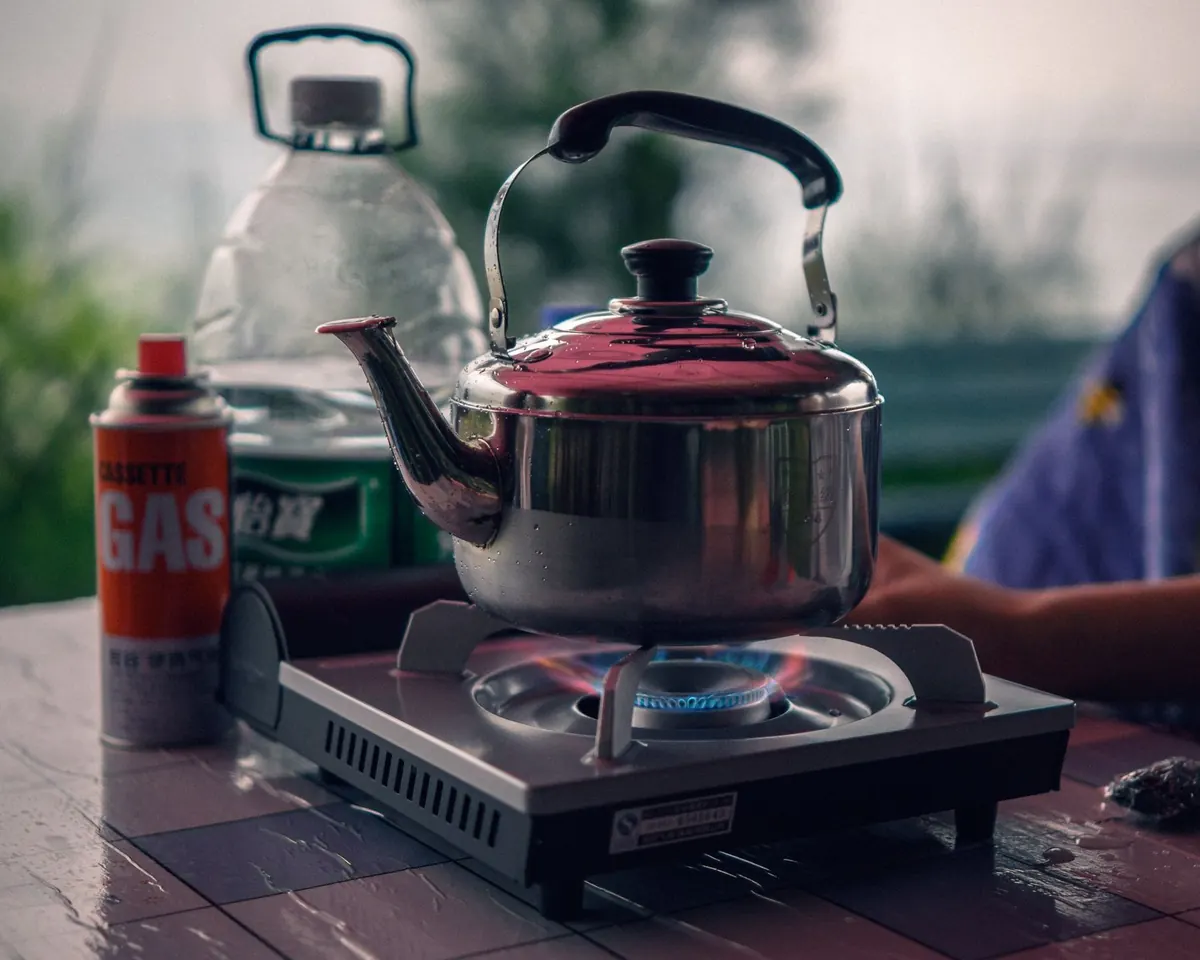
Gas burners do something electric elements cannot: they wrap heat around the sides of a kettle as well as underneath it. That is wonderful when the kettle is built for it, and infuriating when it is not. You end up with a scorched handle, a blackened enamel rim, or a whistle that never gets loud because half the flame is climbing past the base instead of heating water.
None of this is mysterious. A gas kettle succeeds or fails on a few physical details you can check with your own hands in the store. Here is what to look for, how the main materials compare, and how to keep the thing working for years.
Why Gas Burners Are Hard on Kettles
A gas flame is concentrated. A ring of fire sits under the middle of the base, and everything outside that ring gets less heat. Thin steel bottoms have a bad habit of warping under that uneven treatment, and once a base domes upward it rocks on the grate and heats even more slowly.
Flames also spread outward and upward. If your kettle's base is noticeably narrower than the burner, fire licks up the sides, blackening the finish and creeping toward the handle. Gas grates add another wrinkle: support comes from a few metal bars, not a flat plate, so a narrow or unstable kettle can tip when you pour.
Then there is speed. Gas responds instantly, which is why it's so good for cooking and so unforgiving when you walk away. A forgotten kettle on high heat will boil dry and take its finish, gasket, or whistle mechanism with it.
Base, Body, and Lid: What Actually Matters
Ignore the styling for a moment and check these in order.
- Base flatness and thickness. A flat, full-contact base spreads heat and resists warping. Look for an encapsulated or clad bottom with an aluminum or copper layer sandwiched between stainless layers — that core is what carries heat sideways across the base.
- Base diameter versus burner size. The base should roughly match the burner ring. Too small and flames climb the walls; too large and the outer edge stays cool while the middle boils.
- Lid fit. A wobbly lid leaks steam, which slows boiling and can let the whistle misbehave. Give it a gentle twist in the store.
- Weight when full. A 1.7-liter kettle holds about 1.7 kilograms of water, plus the kettle itself. Lift the empty kettle and add that in your head before deciding it feels fine.
- Spout height and shape. Pouring from a heavy kettle with a low spout means hot water near your knuckles. A higher, well-shaped spout gives you room.
Materials That Handle an Open Flame
Stainless steel with an encapsulated base is the sensible default for a gas range. It resists dents and scorching, cleans up easily, and the aluminum or copper core fixes steel's weak heat-spreading. The trade-off is weight once filled.
Enameled steel looks lovely and heats quickly, and the enamel surface wipes clean. But enamel chips if you knock it against a cast-iron grate, and chipped enamel can rust underneath. Handle it gently and it lasts; treat it like a hammer and it won't.
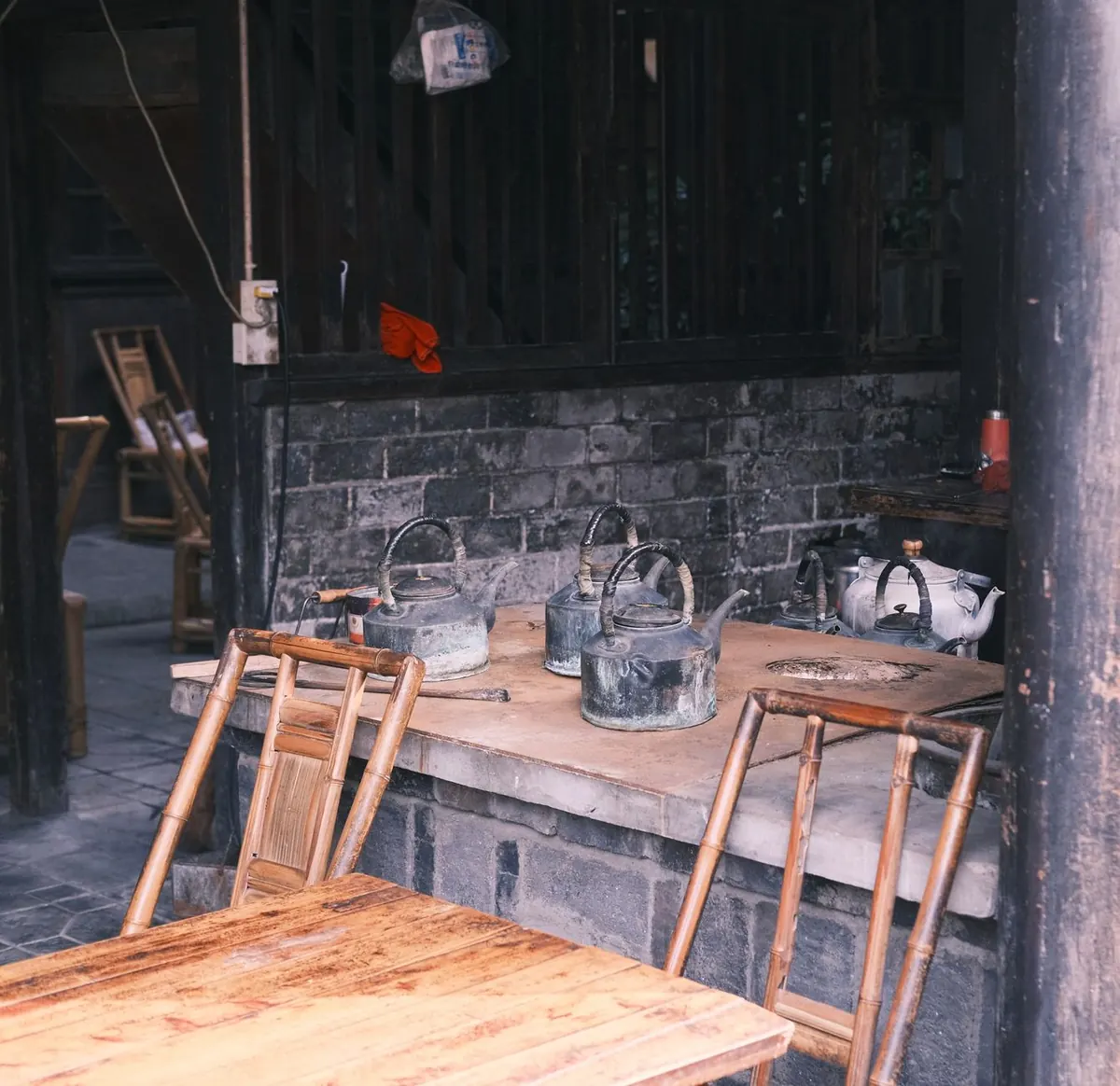
Cast iron and heavyweight bodies hold heat beautifully and feel substantial on the grate, but they take longer to get going and are genuinely heavy when full. If you have wrist or grip issues, this is not the category to buy blind.
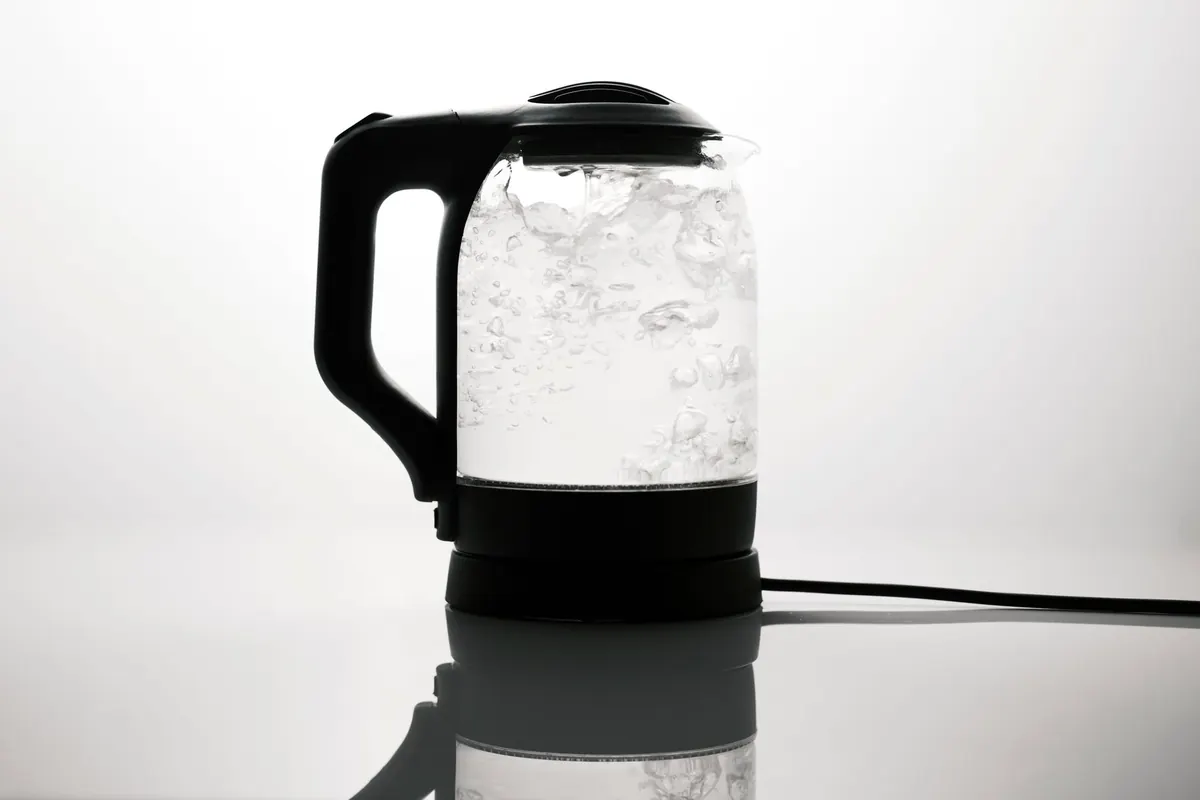
Glass and thin ceramic are the ones to leave on the shelf for gas use. They can crack from thermal shock, and glass bodies often sit on bases too small for a gas ring.
Handles, Spouts, and Whistles
Handles
Look for a handle that arcs up and away from the body so flame and steam pass beneath it. Bakelite and silicone-wrapped grips stay cooler than bare metal, and a riveted attachment is sturdier than a glued or pressed one. Avoid folding handles on gas — they tend to hang low, right where the heat is.
Spouts
A wide spout pours fast but splashes; a narrow one is precise but slow. For everyday tea and coffee, something in the middle works. Check that the spout opening is wide enough to fit a bottle brush, because that's where mineral scale collects.
Whistles
A removable whistle cap is easier to clean and less likely to clog with scale. On gas, the kettle's whistle should be loud enough to hear from another room — the point of a whistle is that you can stop watching the pot.
Kettle Profiles That Work Well on Gas
The everyday stainless kettle
Wide flat base, clad bottom, 1.5 to 1.7 liters, stay-cool handle, removable whistle. Nothing glamorous, but it handles daily use, survives being set down hard, and cleans up fast.
The enameled classic
A dome or bell shape with a broad base and a heat-resistant knob. Great for looks and quick heating, provided you're careful about banging it against grate bars.
The low gooseneck
If you brew pour-over coffee, a gooseneck with a flat base and a long, curved spout gives you control. Choose one with a thicker base than the cheapest models offer, since gas heat punishes thin metal.
Care, Soot, and Scale
Let a hot kettle cool before washing it. Running cold water into a screaming-hot base is how you warp metal and crack enamel.
For mineral scale, simmer a mix of roughly equal parts white vinegar and water for fifteen to twenty minutes, then rinse thoroughly and boil fresh water once before using it again. For soot on the base from a yellow, lazy flame, a paste of baking soda and water and a non-scratch pad does most of the work. If the flame is consistently yellow rather than blue, that's a burner issue worth checking rather than a kettle problem.
Two habits prevent most damage: never boil dry, and never fill above the spout or whistle line. Above that line, water spits out of the spout and the whistle can't sound properly.
How to Choose in Two Minutes
- Measure across your burner grate, then compare it to the kettle's base diameter.
- Set the kettle on a flat surface and press opposite edges — if it rocks, walk away.
- Grip the handle as if pouring a full kettle. Is there clearance above the body for heat and steam?
- Check that the whistle cap lifts off for cleaning and that the spout takes a brush.
- Confirm the base is rated for gas, not just induction or electric.
Buy for the burner you actually have, not the one in the showroom. A flat, thick-based kettle that matches your grate, paired with a handle that stays clear of the flame, will outlast three prettier ones that scorch, wobble, and whistle weakly. And if you ever notice a persistent gas smell or a flame that won't burn cleanly, call a qualified technician rather than working around it.
Photo: Bryanken / Pexels
Related posts
More stories you’ll love reading